

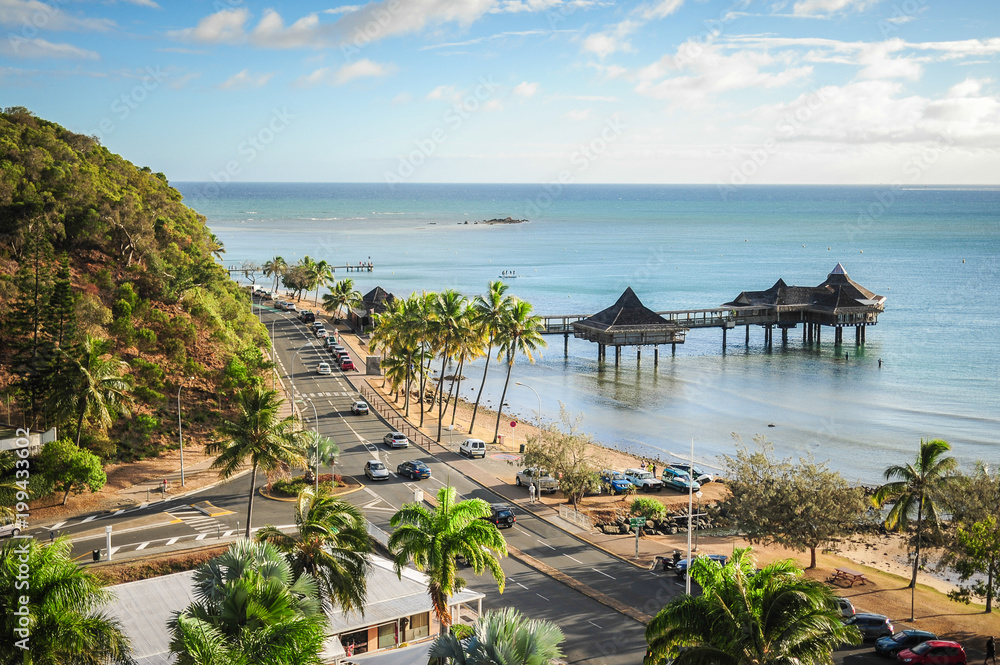
A Comprehensive Guide to Nouméa for the Savvy Senior Traveller
French flavour meets South Pacific beauty in Nouméa, where turquoise lagoons and café culture create an idyllic retreat.
A Seniors’ Stroll Through Nouméa's Coastlines, Culture & Calm
Hello, fellow travellers! If you’re dreaming of an overseas holiday that offers a delightful change of scenery without the marathon flight and the dreaded jet lag, we have just the ticket. Tucked away in the heart of the South Pacific, a mere stone’s throw from Australia’s east coast, lies New Caledonia, a destination that beautifully marries the laid-back charm of an island paradise with the sophisticated flair of a French provincial town.1 Its capital, Nouméa, is affectionately known as the ‘Paris of the Pacific,’ and for very good reason.3
Imagine starting your day with a buttery croissant from a local boulangerie (or bakery), spending the afternoon snorkelling in the world’s largest lagoon, and finishing with a superb French wine as the sun sets over the turquoise water. This is the unique promise of Nouméa. It’s a place where you can wander through vibrant markets filled with tropical fruits and Melanesian crafts in the morning, and browse chic European boutiques in the afternoon.6 This captivating blend of French and Kanak (the indigenous Melanesian inhabitants) cultures creates a travel experience unlike any other in our corner of the globe.6
For the senior Australian traveller, Nouméa is an almost perfect getaway. The short flight times mean you arrive refreshed and ready to explore, not exhausted and out of sync.1 It’s a peaceful, politically stable, and remarkably safe destination with a modern infrastructure that includes excellent roads and a first-rate health system, offering invaluable peace of mind.6 Whether your ideal holiday involves leisurely strolls along sun-drenched promenades, delving into rich cultural history, or simply finding a perfect patch of sand to read a book, Noumea offers a pace of life that can be tailored entirely to you.


The Best Time To Visit
New Caledonia enjoys a semi-tropical climate with two distinct seasons: a warm, humid ‘wet’ season from November to April, and a cooler, drier season from May to October.8 While the idea of a ‘dry season’ sounds immediately appealing, there’s a bit more to it when planning for the ideal balance of comfort, cost, and crowds.
The wet season, particularly from December to March, sees the hottest temperatures, often climbing above 30°C, along with higher humidity and rainfall.9 This is also the official cyclone season, so while a major storm isn’t a daily occurrence, the risk is certainly higher, which is an important consideration for a stress-free holiday.9
The dry season, from May to October, is often called the local ‘winter.’ It brings milder, more pleasant temperatures and significantly less rain, making it fantastic for outdoor activities.8 However, this period also includes the peak European holiday months of July and August. During this time, Nouméa becomes a popular escape for French tourists, leading to a surge in visitors, fuller hotels, and higher prices for both flights and accommodation.8
For senior travellers who often have the flexibility to travel outside of school and major holiday periods, the sweet spot lies in the ‘shoulder’ months. The periods of May to June and September to October offer the very best of both worlds. You’ll enjoy the beautiful, mild, and dry weather of the winter season, but without the peak-season crowds and inflated prices.7 These months provide the perfect conditions for sightseeing, enjoying the beaches, and getting excellent value for your holiday dollar.
The Ideal Time:
To help you plan, here’s a look at what you can expect from the weather month by month.
|
Month |
Avg. High (°C) | Avg. Low (°C) | Avg. Rainfall (mm) |
Avg. Sea Temp (°C) |
| January | 29°C | 24°C | 97mm | 27°C |
| February | 29°C | 24°C | 109mm | 27°C |
| March | 28°C | 24°C | 119mm | 27°C |
| April | 27°C | 23°C | 79mm | 26°C |
| May | 26°C | 21°C | 64mm | 25°C |
| June | 24°C | 19°C | 69mm | 24°C |
| July | 23°C | 18°C | 56mm | 23°C |
| August | 23°C | 18°C | 46mm | 23°C |
| September | 24°C | 18°C | 28mm | 23°C |
| October | 26°C | 20°C | 28mm | 23°C |
| November | 27°C | 21°C | 51mm | 24°C |
| December | 28°C | 23°C | 64mm | 26°C |
Your Nouméa Trip Planning Essentials
Timing your trip and choosing how you get there are the first steps in crafting the perfect holiday. Luckily, Nouméa is wonderfully accessible, and with a little planning, you can ensure your visit coincides with the most comfortable weather and the best value.
Getting to Noumea by Air
One of Nouméa’s greatest appeals is its proximity. Forget the long-haul flights to Europe; you can be sipping a café au lait in a Pacific paradise in just a few hours. Direct flights operate from Australia’s east coast, with convenient connections available from other capital cities. The main international airport is La Tontouta International Airport (NOU), located about 52 km northwest of Nouméa.13
Here’s a quick guide to approximate flight times to help you plan your journey.
|
Departure City |
Approximate Flight Time |
Notes |
| Brisbane | 2 hours, 15 minutes | Direct flights available 15 |
| Sydney | 2 hours, 50 minutes | Direct flights available 17 |
| Melbourne | 3 hours, 30 minutes | Direct flights available 19 |
| Adelaide | 6 hours | Includes one stop 14 |
| Perth | 9-10 hours | Includes one stop 13 |
Cruising to Paradise
For a truly relaxing, all-inclusive holiday, a cruise is a fantastic option. Many South Pacific itineraries departing from Sydney and Brisbane feature Nouméa as a key port of call, allowing you to experience the city’s highlights as part of a broader island-hopping adventure.22
Major cruise lines like P&O Australia, Carnival, and Royal Caribbean regularly sail these waters.3 A typical cruise that includes Nouméa can range from a short 7-night getaway to a more leisurely 14-night exploration of New Caledonia, Vanuatu, and sometimes Fiji.3 It’s a wonderful way to see the region without the hassle of arranging flights, transfers, and multiple hotel check-ins. When the ship docks, you can explore the city on a pre-booked shore excursion or make your own way around for the day.
The Nitty-Gritty: Pre-Travel Essentials
With the big decisions made, it’s time to focus on the practical details that ensure a smooth and worry-free trip.
Visas and Passports: A Hassle-Free Entry
Here’s some great news: as an Australian passport holder, you do not need a visa for a tourist visit to New Caledonia for any stay up to 90 days within a 180-day period.29 This makes the pre-travel process wonderfully simple.
However, there is one crucial detail to pay close attention to: your passport’s validity. Your passport must have at least six months of validity remaining from your planned date of departure from New Caledonia.30 This is a strict international travel rule that can catch people out, so we recommend checking your passport’s expiry date as soon as you start planning your trip.
Money Matters: The Pacific Franc Explained
Navigating a new currency is a key part of any overseas trip. In New Caledonia, you’ll be using the Pacific Franc, which has the international code XPF or is commonly abbreviated as CFP.33
- The Currency: The Pacific Franc has a fixed exchange rate with the Euro (1 € = 119.33 XPF), which means its value against the Australian dollar fluctuates as the Euro does.33 As a rough guide, you can think of 1 AUD being worth around 73 XPF, but it’s always wise to check the current rate before you travel.35 The currency comes in banknote denominations of 500, 1,000, 5,000, and 10,000 XPF, and coins of 5, 10, 20, 50, 100, and 200 XPF.36
- Cost of Living: It’s important to budget accordingly, as New Caledonia is not a cheap destination. Due to its reliance on imported goods, particularly from Europe, the cost of living can be 30-40 per cent higher than in France, so expect prices for meals and shopping to be similar to or slightly higher than back home in Australia.34
- A Smart Payment Strategy: While major credit cards (Visa and Mastercard) are widely accepted in hotels, restaurants, and larger shops in Nouméa, you will certainly need cash for smaller purchases, market stalls, and any travel outside the main tourist hubs.33 Prepaid travel money cards are generally not a good option, as they don’t typically support the Pacific Franc.34 Withdrawing cash from ATMs incurs fees from both the local New Caledonian bank and your Australian bank, so making multiple small withdrawals can become expensive.33
- Therefore, the most effective approach is a hybrid one. Use a credit card with low or no international transaction fees for your larger expenses, like accommodation, tours, and restaurant bills. Then, upon arrival at La Tontouta airport or the cruise terminal, withdraw a moderate amount of cash (perhaps the equivalent of a few hundred Australian dollars) to cover your daily incidentals like bus fares, coffees, and souvenirs. This strategy gives you the convenience and security of card payments while ensuring you have cash on hand when you need it, all while minimising bank fees. And a final tip: always let your bank know your travel dates before you leave to prevent them from flagging your overseas transactions as fraudulent and freezing your card.33
Staying Connected: Your Guide to eSIMs
To avoid hefty international roaming charges from your Australian mobile provider, consider using an eSIM (embedded SIM). If your smartphone is a relatively recent model, it likely supports this technology. An eSIM is a digital SIM that allows you to activate a mobile plan from a local or international provider without having to swap out your physical SIM card. You can purchase a data plan for New Caledonia online before you leave, and it will activate as soon as you arrive, giving you instant access to maps, websites, and messaging apps. Providers like Roamless offer various data packages, making it a simple and cost-effective way to stay connected.38
Packing Smart for Comfort and Convenience
- Power Adapter: New Caledonia uses the European Type F power socket, which has two round pins.40 You will need to pack a travel adapter to charge your Australian devices. The good news is that the local voltage is 220V at 50Hz, which is very close to Australia’s 230V. This means you won’t need a separate voltage converter for most modern electronic devices like phones, tablets, and camera chargers, as they are designed to handle this small variation.40
- Clothing: Pack light, loose-fitting, and breathable clothing suitable for a warm, tropical climate. Think cottons and linens. Don’t forget your swimmers, a sun hat, sunglasses, and comfortable walking shoes. It’s also wise to pack a light jumper, cardigan, or wrap, as evenings can be cooler, especially during the dry season from June to September.12 If you plan to visit any villages or more traditional areas, be sure to pack modest clothing (e.g., longer shorts, skirts, or trousers, and shirts that cover the shoulders) as a sign of respect.44
Travel Insurance: A Non-Negotiable Essential
This is one of the most important pre-travel checks: comprehensive travel insurance is mandatory for visitors to New Caledonia.45 You may be asked to provide proof of your insurance policy upon arrival. Your policy must explicitly cover all medical and hospitalisation expenses, as well as the costs of medical evacuation and repatriation.45 Failure to do so can void your entire policy. When choosing travel insurance, look for a policy that covers medical needs, evacuation, and disruptions to your trip. Providers like Covermore and Go Insurance are well-regarded for offering policies that address these key areas, making them a common choice for many travellers.
Getting Around Nouméa with Ease
Navigating Nouméa is quite straightforward, but choosing the right mode of transport for your needs will make your explorations much more comfortable and enjoyable. While parts of the city are very walkable, it’s also known for being quite hilly, which can be challenging.13 A tiered approach to transport allows you to match your method to your activity.
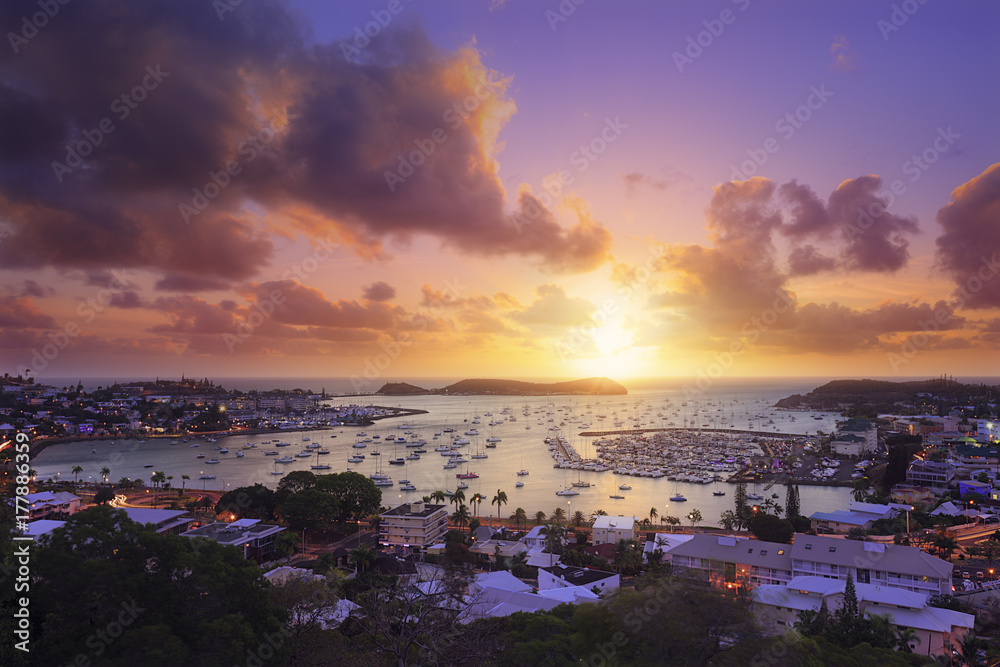
For Leisurely Local Exploration: Walking
The waterfront promenades along Anse Vata and Baie des Citrons are flat, pedestrian-friendly, and perfect for a leisurely stroll.47 This is the best way to soak up the atmosphere, browse the shops, and find a nice spot for lunch. The city centre around Place des Cocotiers is also quite walkable for exploring the main square and nearby streets.53
For Easy, Relaxed Sightseeing: Tourist Transport
For a comfortable overview of the city’s main sights without the physical exertion, two excellent options are designed specifically for visitors:
- The Tchou Tchou Train: This charming, open-sided tourist train takes you on a guided tour of the city and its highlights at a leisurely pace, offering great views of the cosmopolitan boulevards and parks.5 It’s a fun and effortless way to get your bearings.
- Hop-On Hop-Off Bus: On days when cruise ships are in port, companies like Lyvaï operate a convenient hop-on hop-off bus service.55 The route covers key stops including the Municipal Market, Port Plaisance Shopping Mall, Baie des Citrons, and Anse Vata. You can ride the full loop or get off at any stop to explore at your own pace, knowing another bus will be along shortly.
For Point-to-Point Comfort: Taxis and Private Drivers
For maximum convenience, especially for travelling to and from the airport or reaching attractions further from the main bays, taxis and private drivers are the best choice.
- Taxis: Taxis are readily available in Nouméa but are not as ubiquitous as in major Australian cities.58 They can be found at designated ranks (like at the airport, Place des Cocotiers, and near the Aquarium) or ordered by phone.58 Note that rideshare apps like Uber and Lyft are not established in New Caledonia, so you’ll be relying on traditional taxi services.60
- Private Drivers and Shuttles: For airport transfers, a pre-booked shuttle or private car is often the most reliable and stress-free option.64 Companies like Arc en Ciel Service and Private Custom Tours offer comfortable, air-conditioned vehicles and can be booked for private tours or point-to-point transfers, providing excellent door-to-door service.64
Cultural Calendar: Festivals and Events
If your trip aligns, visiting a local festival can be a highlight. These events offer a wonderful insight into Caledonian life and culture.
- The Sacred Yam Festival (Mid-April): A significant event in Kanak culture, celebrating the yam harvest with traditional ceremonies.106
- The Giant Omelette Festival (Weekend after Easter): A quirky and delicious festival held in Dumbéa where a giant omelette is cooked to feed the crowds.106
- The Bourail Fair (Mid-August): New Caledonia’s oldest and most famous rural fair, featuring rodeos, wood-chopping, and a showcase of the ‘Broussard’ (local cowboy) culture.107
- Food Festivals: Throughout the year, various regions celebrate their local produce, including the Avocado Festival in Maré (May) and the Vanilla Festival in Lifou (October).106
