

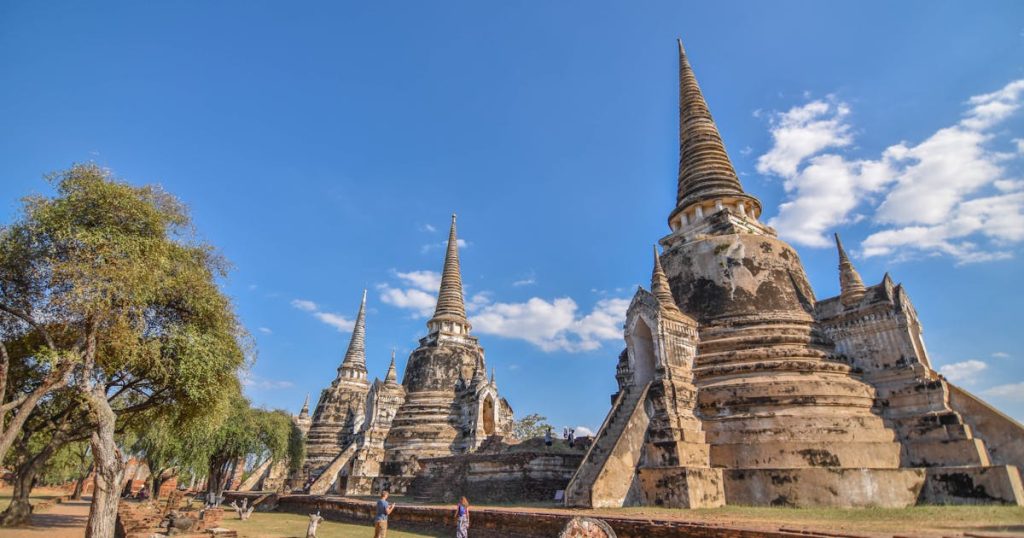
Your Ultimate Guide to Thailand: A Seniors Travel Club Special

Your Ultimate Guide to Thailand: A Seniors Travel Club Special

Golden temples, soothing beaches and a famously warm culture make Thailand a relaxing, great-value destination.

From Golden Buddhas to Island Bliss: Your Thailand Adventure Awaits!

There’s a reason Thailand is affectionately known as the ‘Land of Smiles.’ It’s a place where ancient traditions and modern comforts weave together seamlessly, creating a holiday experience that captivates the senses and soothes the soul. For the savvy senior traveller, Thailand offers a unique blend of exotic adventure and reassuring familiarity. Imagine wandering through the grounds of a glittering gold-leafed temple in the morning, enjoying a world-class (and wonderfully affordable) traditional massage in the afternoon, and dining on exquisite food as the sun sets over a tranquil beach.1 This is a country that moves at your pace, where the genuine warmth of its people and a cultural tradition of respecting elders make you feel welcome from the moment you arrive.4

This isn’t a trip just for the young backpacker set. Thailand has a sophisticated and well-developed tourism industry, with outstanding healthcare facilities and a fantastic array of comfortable accommodation and transport options designed for travellers who appreciate the finer things.1 Whether you fancy an escorted tour that takes care of all the details, a private guide to show you the hidden gems, or simply a long, slow stay in a beautiful resort, this is a destination that caters beautifully to a more relaxed style of travel.6 So, let’s get you ready for an unforgettable adventure! In this guide, we’ll cover everything you need to know to explore this beautiful country with confidence and ease.

Thailand Snapshot & Quick Facts

Here are the essential details you’ll need for your trip, all in one handy spot.

Category Details
Currency Thai Baht (THB). The Aussie dollar typically buys around 21-24 THB, but check the latest exchange rate before you go.8
Time Zone Difference Thailand is 3 hours behind Australian Eastern Standard Time (AEST) and 4 hours behind during Daylight Saving (AEDT).8
Primary Language(s) Central Thai is the official language. English is widely spoken in tourist hubs like Bangkok, Chiang Mai, and Phuket, but less so in rural areas. A smile and a translation app go a long way.11
Average Temps & Rainfall Cool/Dry Season (Nov–Feb)

  • Temperature: 21–33 °C
  • Rainfall: 10–50 mm

Hot/Dry Season (Mar–May)

  • Temperature: 25–36 °C
  • Rainfall: 30–220 mm

Rainy/Monsoon Season (Jun–Oct)

  • Temperature: 24–33 °C
  • Rainfall: 150–350+ mm14
Best Months to Visit November to February. The weather is glorious: cooler, drier, and less humid, making it perfect for sightseeing.7
Flight Time from Australia Direct: SYD/MEL (~9.5 hours),
PER (~7 hours).One-stop: BNE (~13+ hours),
ADL (~11+ hours).10
Visa Rules for Australians You can enter visa-free for tourist stays of up to 60 days. You’ll need a passport with 6 months’ validity and must submit an electronic Thailand Digital Arrival Card (TDAC) within 72 hours of your flight’s arrival.24
Emergency Numbers Police: 191

Ambulance: 1669

Tourist Police (English speaking): 115526

Power Plug & Voltage Voltage: 230 V

Frequency: 50 Hz

Plug Types: A, B, C, and O are common.

Adapters: Australian appliances (Type I) will need an adapter.

Best option: carry a universal adapter.28

Senior Discounts? Yes, but mainly for Thai citizens. Some public transport discounts exist (e.g., Bangkok’s BTS Skytrain), but aren’t guaranteed for tourists. Some tourist destinations may give senior discounts, however. It never hurts to ask politely!30
Wheelchair Accessibility Rating: 2/5. Accessibility is a challenge. Modern hotels and malls are generally good, but footpaths are often uneven, and public transport is difficult. Careful planning with specialist providers is essential for wheelchair users.31

Getting Around Locally

Navigating Thailand can be an adventure in itself. For seniors, the key is to prioritise comfort and safety over saving a few dollars. Planning your transport is one of the most important investments you can make in having a smooth, stress-free holiday.

Transport Overview

  • Domestic Flights: The fastest and most efficient way to travel between far-flung regions like Bangkok, Chiang Mai, and Phuket. Numerous airlines, including Thai Airways and Bangkok Airways, operate these routes frequently.
  • Trains: A scenic option for journeys like the overnight trip from Bangkok to Chiang Mai. However, be aware that trains can be slow, and accessibility is a significant issue for those with mobility challenges.31
  • Coaches: Modern, air-conditioned coaches are a comfortable and reliable way to travel between major cities. Many organised tours use private coaches, which is an excellent, stress-free option.38
  • Ferries: Essential for island hopping in the south. Major operators like Lomprayah and Seatran run regular services between popular islands like Koh Samui, Koh Phangan, and Koh Tao, as well as from the mainland (e.g., Krabi) to islands like Koh Phi Phi.39
  • Rideshare & Taxis: The Grab app is the Uber of Southeast Asia and is an absolute must-have. It’s reliable, you agree on the price upfront, and it eliminates any language barriers or fare scams.40 For regular street taxis, always politely insist that the driver use the meter (‘meter, krap/ka’) to avoid being overcharged.42

Mobility & Accessibility

This is where planning is crucial. While Thailand is welcoming, its infrastructure was not built with accessibility in mind.

  • Terrain Summary: Most tourist areas in cities are flat, but the footpaths are notoriously uneven, broken, and often cluttered with obstacles, presenting a significant trip hazard.31 Be prepared to walk slowly and watch your step. Temple complexes and historical sites frequently have many stairs and rough, unpaved ground.32
  • Availability of Ramps & Lifts: Modern shopping centres and major international hotels are generally well-equipped with ramps and lifts. Outside of these, they are rare. Public transport, like the city buses and most train stations, lacks accessibility features.32
  • Mobility Aid Rentals: In areas with large retiree and expat populations, such as Hua Hin and parts of Phuket, you can find specialist companies that rent mobility scooters and other aids. Some even offer accessible van transport, which can be a lifeline for wheelchair users.31 This needs to be researched and booked well in advance.
  • Requesting Assistance: You can pre-book wheelchair assistance with your airline for a smooth airport experience. At train and bus stations, formal assistance is not standard, and you will be relying on the kindness of staff and fellow passengers, which, while often forthcoming, is not guaranteed.31

Top 5 Thailand Cruise Deals

24 nights 11 January 2028

India’s Golden Triangle & Taj Mahal with Princess Cruises Southeast Asia Voyage

Ship: Diamond Princess

Destination: India, Singapore, Thailand, Malaysia, Vietnam Returns: Singapore

Price from $5,999

Available class:

Interior, Oceanview, Balcony, Mini-Suite

29 nights 19 January 2028

Vietnam & Cambodia Discovery with Exclusive Dragon Pearl Cave Event & Southeast Asia Cruise

Ship: Diamond Princess

Destination: Vietnam, Cambodia, Singapore, Thailand, Malaysia Returns: Singapore

Price from $8,499

Available class:

Interior, Oceanview, Balcony, Mini-Suite

22 nights 5 January 2028

Splendours of Sri Lanka, Scenic Rail Journey & All-Inclusive Thailand & Vietnam Voyage

Ship: Celebrity Solstice

Destination: Sri Lanka, Singapore, Thailand, Vietnam, Hong Kong Returns: Hong Kong

Price from $9,999

Available class:

Inside, Ocean View, Veranda, Concierge Class

19 nights 26 January 2028

All-Inclusive Jewels of Southeast Asia Cruise with Luxury Bali Escape

Ship: Celebrity Millennium

Destination: Thailand, Malaysia, Indonesia Returns: Bali

Price from $6,999

Available class:

Inside, Ocean View, Veranda, Concierge Class

24 nights 27 December 2027

New Year in the Maldives, Jewels of Southeast Asia Cruise & Luxury All-Inclusive Bali Escape

Ship: Celebrity Millennium

Destination: Maldives, Singapore, Thailand, Malaysia, Indonesia Returns: Bali

Price from $12,999

Available class:

Inside, Ocean View, Veranda, Concierge Class

View all deals

Why Seniors Love Thailand

It’s the combination of exotic culture and easy living that makes Thailand a perennial favourite. Here’s a quick look at what makes it so special for travellers in our club.

Checked

A Gentle Pace of Life: Outside the exhilarating buzz of Bangkok, life in Thailand slows to a wonderfully relaxed rhythm. Destinations like Chiang Mai in the north or the beautiful southern beaches offer a tranquil atmosphere that’s perfect for unwinding and exploring at your own speed.1

Checked

Unbeatable Value: Your Aussie dollar goes a very long way here. From mouth-watering meals for just a few dollars to affordable transport and famously inexpensive massages, you can enjoy a longer or more luxurious holiday without breaking the bank.4

Checked

World-Class Wellness: Thailand is a global hub for rejuvenation. You’ll find an incredible array of spas offering traditional Thai massages, holistic treatments, and full-blown wellness retreats designed to help you relax, recharge, and feel your absolute best.2

Checked

Rich History & Culture: The country’s heritage is both magnificent and accessible. You can easily spend your days exploring dazzling temples, wandering through the ruins of ancient cities like Ayutthaya, or soaking up the atmosphere at a colourful local market.1

Checked

Stunning, Soothing Scenery: From the lush, green mountains and misty hills of the north to the iconic limestone cliffs and turquoise waters of the south, the landscapes are breathtakingly diverse. It’s a feast for the eyes.1

Checked

The Glorious Food: Thai cuisine is a true highlight and an adventure in itself. And don’t worry, it’s not all fiery hot! There are countless mild, fragrant, and flavourful dishes to discover, from rich Massaman curries to the classic Pad Thai.1

Checked

Warmth in Every Sense: This covers both the beautiful tropical climate (a perfect escape from a chilly Australian winter) and the legendary warmth and hospitality of the Thai people, whose smiles are as sunny as the weather.4

Checked

Did You Know?

Thailand is the only country in Southeast Asia that was never colonised by a European power. This unique history has helped preserve its wonderfully distinct cultural identity, traditions, and architecture for you to enjoy today.5

Festivals & Events Calendar

Timing your trip with a Thai festival can be a magical experience. Here are a few highlights.

Checked

January: New Year: Thai New Year celebrations are generally quiet and family-oriented, with many people visiting temples to make merit for the year ahead.62

Checked

February: Chiang Mai Flower Festival: The northern city bursts into bloom with beautiful parades and elaborate floral displays. A lovely, relaxed event to witness.62

Checked

April: Songkran (Traditional Thai New Year): This is Thailand’s most famous festival, a nationwide water fight celebrating the new year.

  • Senior Suitability: It’s incredibly fun to watch from the safety of a cafe or hotel balcony. However, the streets in the main tourist areas become very crowded, wet, and slippery. It’s best to avoid the epicentres of the water fights if you have mobility concerns or don’t want to get soaked!62
Checked

May: Visakha Bucha Day: A deeply significant Buddhist holiday commemorating the Buddha’s birth, enlightenment, and death. It’s observed with peaceful and beautiful candlelit processions at temples across the country.62

Checked

November: Loi Krathong & Yi Peng: This is arguably Thailand’s most beautiful and enchanting festival.

  • Senior Suitability: Highly recommended. People release small, candlelit floats (krathongs) onto rivers and canals for good luck, while in the north (especially Chiang Mai), thousands of paper lanterns (Yi Peng) are released into the night sky. It’s a breathtaking visual spectacle that can be enjoyed from a riverside restaurant or a quiet spot without any strenuous activity. Book accommodation and dinner spots well in advance.62

Trip Planning Essentials

A little bit of forward planning goes a long way to ensuring a smooth and delightful Thai holiday. Here’s what you need to consider before you go.

When to Go:

Choosing the right time to visit is about balancing weather, crowds, and cost. For seniors, it’s also about managing health risks like heat stress or poor air quality, which means you need to choose what’s right for you.

  • Cool & Dry Season (November – February): This is the peak tourist season for a reason. The weather is at its best, with comfortable temperatures, lower humidity, and plenty of sunshine. It’s ideal for sightseeing. The trade-off is that you’ll encounter larger crowds and pay higher prices for flights and accommodation.7
  • Hot & Dry Season (March – May): The heat and humidity ramp up significantly, which can be oppressive for some, especially in April, the hottest month.4 A critical factor for this period is the ‘burning season’ in northern Thailand (around February to April), when agricultural burning can lead to very poor air quality. If you have any respiratory conditions, it is wise to avoid the Chiang Mai region during these months.33 On the plus side, crowds are thinner than in the peak season.
  • Rainy Season (June – October): Don’t let the name put you off entirely. This season brings the lowest prices, the fewest tourists, and stunningly lush, green landscapes. The rain often comes in short, intense downpours in the afternoon rather than all-day drizzles, so you can still plan activities for the mornings. September is typically the wettest month across the country.14

Shoulder-Season Sweet Spots: For a fantastic balance of good weather, smaller crowds, and better prices, consider travelling in late October/early November or late February/early March. You might catch the tail end of the rains or the beginning of the heat, but you’ll often be rewarded with great value.

Getting There:

Thanks to its popularity, Thailand is very well-connected to Australia.

  • Flying: You can find direct flights to Bangkok from Sydney, Melbourne, and Perth on major airlines like Qantas and Thai Airways.10 From Brisbane and Adelaide, you’ll typically have a comfortable one-stop journey, often via Singapore or another Southeast Asian hub.21
  • Cruising: While direct cruises from Australia are less common, many Southeast Asian cruise itineraries feature popular Thai ports like Phuket and Laem Chabang (the port for Bangkok). This is a wonderfully comfortable and hassle-free way to see the region, as you only have to unpack once.

Travel Tip: Beating the Long Haul

For the 9+ hour flight, treating yourself to Premium Economy can be a game-changer. The extra legroom, wider seat, and increased recline make a huge difference to your comfort and ability to get some sleep. Keep an eye out for sales, use your frequent flyer points for an upgrade, or book well in advance to secure the best seats.

Sample Trip Durations:

Thailand is a big country, so how long you stay will determine how much you can comfortably see.

  • 7-Day Taster: Perfect if you’re short on time. Focus on just one region to avoid feeling rushed. You could do a ‘Bangkok & Ancient Capitals’ trip, exploring the city and nearby Ayutthaya 6, or opt for a ‘Phuket Beach Retreat’ for a week of pure sun-and-sea relaxation.2
  • 14-Day Classic: This is the ideal duration for a first-time visitor. It allows you to experience two or three different facets of the country without rushing. A popular combination is ‘Bangkok, Chiang Mai, and a Southern Island,’ giving you a brilliant mix of bustling city, northern culture, and coastal beauty.1 We’ve based our sample itinerary in Section 14 on this model.
  • 21-Day ‘Slow Travel’ Immersion: If you have the luxury of time, a three-week trip allows you to travel at a wonderfully leisurely pace. You can explore multiple regions in depth, perhaps adding Chiang Rai in the north, Kanchanaburi in the central plains, and hopping between a few different southern islands to find your favourite.6

Senior-Friendly Transport Passes:

  • Bangkok BTS Skytrain: The Skytrain is a clean, efficient way to get around the city’s traffic. A ‘Senior Pass’ offering a 50 per cent discount is available for Thai citizens over 60. While it’s not officially for tourists, it can be worth asking at a major station’s ticket office with your passport in hand.30
  • Hop-On-Hop-Off Buses: These tourist buses, available in Bangkok and other major cities, are a fantastic, low-stress way to see the main sights. You can travel in air-conditioned comfort and minimise walking between attractions.
  • Tour & Cruise Shuttles: The easiest option of all. Booking an organised tour or a cruise means all your transport is taken care of in comfortable, private vehicles, allowing you to simply sit back and enjoy the scenery.7

Highlights & Experiences for Every Pace:

Thailand’s magic lies in its variety. Whether you’re a history buff, a nature lover, or just want to relax, there’s an experience perfectly suited to you.

History & Heritage

  • Experiences: Stand in awe of the dazzling Grand Palace and the reclining Buddha at Wat Pho in Bangkok. Step back in time as you wander the magnificent ruins of Ayutthaya, the former capital of Siam. Reflect on history at the famous Bridge on the River Kwai in Kanchanaburi.1
    • Stamina Caveats: Both the Grand Palace complex and the Ayutthaya historical park are vast and require a lot of walking, often on uneven ground and in intense heat. A guided tour with an air-conditioned vehicle is highly recommended to manage your energy and get the most out of the visit.7
  • [MAP: insert suggested walking/driving route] A recommended gentle route could start at Wat Mahathat (for the famous Buddha head in tree roots), proceed to Wat Phra Si Sanphet, and finish at the reclining Buddha at Wat Lokayasutharam, using a tuk-tuk between sites.

Coastal & Nature

  • Experiences: Find your perfect patch of sand on one of Phuket’s more serene beaches, like the family-friendly Kata Beach or the quieter Nai Yang Beach.2 Take a comfortable day cruise through the spectacular limestone karsts of Phang Nga Bay (home to ‘James Bond Island’). Have a heartwarming encounter at an ethical elephant sanctuary, such as the renowned Elephant Nature Park near Chiang Mai or one of the many excellent sanctuaries in other parts of the country.2
    • Stamina Caveats: When booking boat tours, ask about the vessel size. Larger boats are generally more stable and comfortable than traditional long-tail boats, which can be tricky to board and less steady in choppy water.

Food & Wine

  • Experiences: Learn the secrets of Thai cuisine in a fun, hands-on cooking class, many of which cater to a relaxed pace.2 Explore a vibrant night market for dinner, go early (around 6 pm) to enjoy the atmosphere before the biggest crowds arrive. For a special occasion, book a romantic dinner cruise along the Chao Phraya River in Bangkok.7
    • Stamina Caveats: Be aware that street food stalls and markets often have limited or no seating. Plan to eat at establishments with proper tables if you need to rest your feet.

Arts & Culture

  • Experiences: Take a leisurely stroll through the charming streets of Phuket Old Town, admiring the colourful Sino-Portuguese architecture and quirky cafes.2 Immerse yourself in the stories of the nation at the National Museum in Bangkok.32 In the evening, enjoy a mesmerising traditional Thai dance and cultural show.
    • Stamina Caveats: Museums can involve a lot of standing. Pace yourself and take advantage of any available seating.

Wellness & Slow Days

  • Experiences: Treat yourself to a traditional Thai massage at a reputable spa—it’s an essential Thai experience. Join a gentle yoga or meditation class, often held in beautiful, serene settings.2 Don’t feel guilty about scheduling a ‘do nothing’ day to simply relax by the pool at your resort with a good book.
    • Stamina Caveats: Before a massage, be sure to communicate any health conditions, injuries, or areas of sensitivity to your therapist so they can adjust the pressure accordingly.

Soft Adventures

  • Experiences: Enjoy a relaxed walk among the vibrant blooms and themed gardens of the Phuket Botanic Garden.2 For one of the best views in the north, take a scenic drive up the mountain to Wat Phra That Doi Suthep, the iconic temple overlooking Chiang Mai.33 For a novel way to see the countryside, consider an e-bike tour, which takes all the effort out of pedalling.
    • Stamina Caveats: The final climb to Doi Suthep temple involves a long staircase of over 300 steps. However, a cable car/funicular is available for a small fee, making it easily accessible for everyone.

Accommodation at a Glance:

Where you stay can make or break your holiday. In Thailand, you’re spoilt for choice with options that offer fantastic comfort and value.

Typical Price Bands (per night, in AUD):

  • $$: Good quality 3-star hotels with solid amenities: $50 – $100.44
  • $$$: Excellent 4-star hotels and resorts with pools and restaurants: $90 – $200.44
  • $$$$: True 5-star luxury hotels, resorts, and private villas: $250+.44
  • These prices are a general guide. Expect to pay more during the peak season (December-January) and find great bargains during the rainy season (especially September).44

Recommended Areas for Seniors (Quiet, Flat, Central):

  • Bangkok: For peace and stunning views, the Riverside area is unbeatable. For a more local, yet still central and upmarket feel, consider the residential neighbourhoods of Sathorn, Thong Lo, or Ari, which are quieter than the main tourist strip of Sukhumvit but still have great restaurants and Skytrain access.45
  • Chiang Mai: The Riverside area offers a tranquil escape, while neighbourhoods just outside the moat, like Santitham, provide a great balance of quiet residential streets and easy access to the Old City’s attractions.47
  • Phuket: Avoid the 24/7 party scene of Patong. Instead, opt for the beautiful and more relaxed beach towns of Kata, Karon, or Kamala. For an even quieter, more residential feel favoured by expats, look at Rawai and Nai Harn in the south.2

Hotel vs. Serviced Apartment vs. Cruise:

  • Hotels & Resorts: The classic choice, best for service, security, and amenities like pools, daily housekeeping, and on-site restaurants.
  • Serviced Apartments: An excellent option for longer stays (a week or more). You get more space, a separate living area, and a kitchenette, giving you the flexibility to prepare some of your own meals.
  • Cruise Ship: A fantastic all-in-one package. It removes the hassle of booking multiple hotels, packing and unpacking, and arranging transport between destinations.
  • Countryside Stay: For a truly peaceful retreat, consider a boutique lodge or resort in the countryside near Chiang Mai, such as in the Mae Rim or Hang Dong areas.48

Finding Accessible Properties: This is crucial. Always book a hotel with a lift. When searching on booking websites, use the filters for ‘wheelchair accessible’ and ‘elevator/lift.’ It is highly recommended to call or email the hotel directly to confirm the specifics of their accessible rooms, such as whether they have a roll-in shower or grab bars. For guaranteed accessibility, look into specialist providers like Care Resorts in Hua Hin, which are purpose-built for wheelchair users and seniors.31

Senior Saver: Scoring a Deal

To get the best rates, travel during the shoulder seasons (April-June, September-October). For stays of a week or longer, don’t hesitate to contact the hotel directly before booking to ask for a ‘long-stay rate.’ Many independent hotels are happy to offer a discount for a guaranteed extended booking, especially outside the busiest peak season.

Eating & Drinking:

Thai food is a highlight of any trip. It’s a wonderful symphony of salty, sweet, sour, and spicy flavours.

Local Cuisine 101

Don’t be shy! Dive in and try these classics. You can always ask for dishes to be made ‘mai phet,’ which means ‘not spicy.’

  • Massaman Curry: A mild, rich, and fragrant curry with Persian influences. It’s often made with chicken or beef and contains potatoes and peanuts. It’s a wonderful entry point to Thai curries.35
  • Tom Yum Goong: The world-famous hot and sour soup, usually with prawns. It’s a flavour explosion of lemongrass, galangal, and lime.35
  • Pad Thai: You can’t go to Thailand without trying its most famous noodle dish. It’s a delicious stir-fry of rice noodles, tofu or prawns, bean sprouts, and peanuts.1
  • Tom Kha Gai: A close cousin of Tom Yum, this soup is creamier and milder, with a base of coconut milk, chicken, and the fragrant galangal root.35
  • Kaeng Khiao Wan (Green Curry): A beloved classic. It’s creamy from coconut milk but can pack a punch. Definitely ask for this one ‘mai phet’ if you’re sensitive to chilli.35
  • Mango Sticky Rice: The ultimate Thai dessert. Sweet, ripe mango served with coconut-infused sticky rice. It’s simple, yet absolutely divine.51

Dietary & Health Considerations:

  • Vegetarian/Gluten-Free: Finding vegetarian (‘jay’) and gluten-free food is relatively easy in tourist areas, with many restaurants offering dedicated menus. However, hidden ingredients like fish sauce or soy sauce can be an issue, and cross-contamination is a risk in busy kitchens. For peace of mind, it’s best to stick to well-reviewed restaurants known for catering to dietary needs.51
  • Low-Sodium: This can be tricky, as fish sauce, shrimp paste, and soy sauce are staples. You can request your food be made ‘mai kem’ (not salty), but results may vary.
  • Tap Water Safety: Under no circumstances should you drink the tap water. It can contain harmful bacteria and parasites that can cause serious gastrointestinal illness.52 Only drink bottled or properly filtered water. Ice is generally safe in good hotels and restaurants, as it’s made from purified water, but be cautious with ice from street vendors. Salads are also fine in reputable establishments.

Foodie Experiences:

  • Cooking Classes: A fun, interactive, and not-too-strenuous way to spend a morning or afternoon. You’ll learn about local ingredients at a market before creating a few classic dishes yourself.2
  • Market Tours: A guided tour of a local wet market is a fascinating sensory experience, showcasing the incredible variety of fresh produce, herbs, and spices that form the foundation of Thai cuisine.
  • Winery Visits: For something different, Thailand has a small but growing wine scene. Vineyards near Hua Hin and Khao Yai National Park offer tours and tastings and make for a lovely day trip.

Travel Tip: Communicate Clearly

Download a translation app like Google Translate for your phone. It’s also a great idea to have a pre-written ‘allergy card’ in the Thai language that clearly states your dietary requirements (e.g., ‘allergic to peanuts,’ ‘strictly gluten-free’). Apps like Find Me Gluten Free can also help you locate coeliac-friendly restaurants.41

Money, Phones & Tech:

Staying connected and managing your money is simple in Thailand with a bit of know-how.

  • Cash vs. Card: While you can use your credit or debit card at major hotels, upmarket restaurants, and large shopping centres, cash is still king in Thailand. You will absolutely need cash (Thai Baht) for smaller restaurants, markets, street food, tuk-tuks, and most local shops. It’s essential to always carry a reasonable amount of cash with you.34
  • ATMs and Currency Exchange: ATMs are everywhere in tourist areas, including at 7-Eleven stores. For the best reliability, use ATMs attached to major banks like Bangkok Bank, Kasikorn Bank, or Siam Commercial Bank.54 When you withdraw cash, the ATM will often ask if you want to proceed ‘with conversion’ or ‘without conversion.’
    Always choose ‘without conversion.’ This means you decline the ATM’s poor exchange rate and let your home bank in Australia handle the conversion at a much better rate. This single tip can save you a surprising amount of money.34

Mobile Data Options: Staying connected is easy and affordable.

  • eSIM: The most convenient option. You can buy and install an eSIM on your smartphone before you even leave Australia.
  • Local SIM Card: Very cheap and easy to buy upon arrival at the airport or from any 7-Eleven. Staff are usually happy to help you install it and get it working.
  • Roaming Packs: Check the rates with your Australian provider (Telstra, Optus, etc.), but this is almost always the most expensive option.

Useful Apps to Download:

  • Grab: Your go-to app for booking rides (like Uber) and ordering food delivery. It’s safe, reliable, and eliminates fare haggling.40
  • Google Translate: Invaluable for reading menus, understanding signs, and communicating with people who don’t speak English.41
  • LINE and WhatsApp: These messaging apps are widely used by locals, including tour guides and drivers, making it easy to stay in touch.41
  • Agoda: A very popular hotel booking app for Asia, often with great deals.41

Healthcare:

Your well-being is the top priority. Thailand is a very safe country, but it pays to be prepared and aware.

Healthcare Quality

One of the most reassuring aspects of travelling to Thailand is the high standard of its private healthcare. Major cities like Bangkok, Chiang Mai, and Phuket have world-class international hospitals with English-speaking doctors and dedicated departments for foreign patients. The quality of care is excellent, providing great peace of mind should you need any medical attention.1

Key Hospitals: Look for well-regarded hospital groups like Bangkok Hospital (with branches in major cities), Bumrungrad International Hospital (Bangkok), and Mission Hospital (Bangkok).56

Common Scams & Safety:

Like any popular tourist destination, there are a few common scams to watch out for. Being aware of them is the best way to avoid them.

  • The ‘Attraction is Closed’ Scam: Near major sites like the Grand Palace, a friendly, well-dressed local might approach you and say the attraction is closed for a special ceremony. They will then offer to take you to another ‘special’ temple, which inevitably ends at a gem or tailor shop where they earn a commission. The Fix: Politely thank them and walk away. Always check the official entrance yourself.42
  • Tuk-Tuk & Taxi Scams: Some drivers will offer a very cheap fixed price for a tour, but will spend the day taking you to shops instead of the sights you want to see. For regular taxi rides, some drivers will refuse to use the meter and quote an inflated flat rate. The Fix: For tours, use a reputable company. For taxis, only get in if the driver agrees to use the meter. For tuk-tuks, agree on the price for your specific destination before you get in. Better yet, use the Grab app to avoid these issues altogether.42
  • Jet Ski/Scooter Rental Scam: A common scam in beach towns where the vendor claims you’ve damaged the vehicle upon return and demands a huge payment, often holding your passport as leverage. The Fix: It’s safest to avoid these rentals. If you do rent a scooter, use a reputable shop away from the beachfront and take detailed photos and a video of the vehicle from every angle before you drive away.58
  • Petty Theft: Pickpocketing can happen in crowded markets, on public transport, or at busy tourist sites. Keep your bag secure and be aware of your surroundings, especially if a stranger tries to distract you.42

Travel Insurance:

Travel insurance is absolutely non-negotiable for a trip to Thailand.

  • Ensure your policy has a high level of cover for overseas medical emergencies, including medical evacuation and repatriation back to Australia. Costs for serious medical incidents can be astronomical.1
  • You must declare all pre-existing medical conditions to your insurer. Failure to do so can void your entire policy. Choose an insurer that has a straightforward online medical assessment to ensure you are properly covered.59
  • If you are going on a cruise, check that your policy has a specific cruise cover clause.

Providers like Covermore and Go Insurance are well-regarded for offering policies that address these key areas, making them a common choice for many travellers.

Medications & Vaccinations:

  • Bringing Prescription Meds: For personal use, you are generally allowed to bring up to a 90-day supply of your medication.60 It must be in its original, clearly labelled packaging, and you should carry a letter from your doctor detailing your medical conditions and the medications you take.60
  • Restricted Medications: For any medication containing a narcotic (like codeine, oxycodone, fentanyl) or a psychotropic substance, you must apply for a permit online from the Thai Food and Drug Administration (FDA) before you travel. Check their website for the specific list and application process.60
  • Vaccinations: Visit your GP at least 6-8 weeks before your trip to discuss recommended vaccinations for Thailand and to ensure all your routine shots are up to date.

Climate & Environment Warnings:

  • Heat and Dehydration: The tropical climate is lovely, but can be draining. Drink plenty of bottled water, wear a wide-brimmed hat, and schedule strenuous activities for the cooler parts of the day, like the early morning.4
  • Air Quality in the North: Remember the ‘burning season’ (usually February-April) in Northern Thailand. If you have asthma or other respiratory issues, check the air quality index (AQI) for cities like Chiang Mai before you travel and consider visiting at a different time of year.33

Emergency Phrases in Thai:

It’s always helpful to know a few key phrases.

  • ‘Help!’: ‘Chûay dûay!’
  • ‘Call an ambulance’: ‘Rîak rot pá-ya-baan’
  • ‘Go to the hospital’: ‘Pai rong pá-ya-baan’

Environmental & Responsible Travel:

Travelling thoughtfully ensures that your visit has a positive impact on the local communities and environment you’ve come to enjoy.

Respectful Etiquette

  • The Royal Family: The Thai monarchy is deeply revered. It is illegal and considered extremely disrespectful to criticise or speak ill of the King or Royal Family. This respect extends to the currency, which features the King’s image; never step on a coin or banknote to stop it from rolling away.53
  • Temple Dress Code: Modesty is key. When visiting any temple, ensure your shoulders and knees are covered. This applies to both men and women. A lightweight sarong is a perfect, easy-to-carry item for this purpose. You must also remove your shoes and any hat before entering a temple building.63
  • Tipping: Tipping is not traditionally expected, as a 10 per cent service charge is often automatically added to the bill in hotels and larger restaurants. However, it has become more common due to tourism. For great service, it’s a kind gesture to round up a taxi fare or leave a small note (20-50 baht) for a massage therapist or a particularly helpful waiter. It is always appreciated but never required.53
  • Photography: Always be respectful when taking photos. Ask for permission before taking a close-up picture of someone, including monks.

Eco-Choices

  • Reduce Plastic: Bring a reusable water bottle with you. Many hotels and guesthouses have filtered water stations where you can refill them, helping to reduce the number of single-use plastic bottles.
  • Ethical Wildlife Tourism: The welfare of elephants in tourism is a major concern. Avoid any venue that offers elephant riding. Instead, support genuine sanctuaries that focus on rescue, rehabilitation, and observation. Places like Elephant Nature Park (Chiang Mai), Phang Nga Elephant Park, and Phuket Elephant Sanctuary are excellent examples of ethical tourism, where you can watch these magnificent animals in a natural environment.43

Packing & Preparation:

Packing smart means you’ll be comfortable and prepared for anything.

Seasonal Clothing Checklist

  • Lightweight, breathable clothing made from cotton or linen.
  • A few long-sleeved shirts and long trousers or skirts for sun protection and respectful temple visits.
  • A sarong or pashmina: incredibly versatile for covering shoulders at a temple, using as a light blanket, or as a beach wrap.
  • Comfortable, well-broken-in walking shoes with good grip. This is non-negotiable.
  • A light rain jacket or a small umbrella, especially if travelling between May and October.
  • Swimsuit, sun hat, and sunglasses.
  • A light jumper or cardigan for overly air-conditioned restaurants, cinemas, or buses.
  • Packing Tip: Use packing cubes. They are fantastic for compressing clothes and keeping your suitcase organised.

Medications & Documents

  • All your prescription medications in their original, labelled containers.
  • A letter from your doctor detailing your health conditions and the medications you require.
  • A printed copy of your travel insurance policy details.
  • Photocopies of your passport and any visas. It’s also wise to have digital copies saved in your email or a cloud storage service.

Power Adapters & Gadgets

  • A universal travel adapter is essential, as plug types can vary.
  • A portable power bank is a lifesaver for keeping your phone and camera charged during long days of sightseeing.

Cabin Comfort Kit for the Flight

  • An inflatable neck pillow, eye mask, and earplugs.
  • Compression socks to help with circulation and reduce the risk of DVT on the long flight.
  • Any essential medications that you might need during the flight.

You Should Know: Bringing Souvenirs Home

When you fly back into Australia, remember your duty-free limits. Each adult can bring in $2.25 litres of alcohol and $25 grams of tobacco products (which is about 25 cigarettes, plus one open packet). The limit for general goods (like souvenirs, electronics, and gifts) is AUD$900 per adult. Always declare any food, plant, or animal products to Australian biosecurity.66

Your Relaxed 14-Day Thailand Itinerary:

Many travellers feel overwhelmed by the choices in Thailand. This sample itinerary provides a template for a classic trip that balances iconic sights with essential downtime, perfect for a senior-friendly pace.

Day

Location

Highlights & Pace

Day 1 Bangkok Arrive & Settle In (Low-Mobility Day): Arrive at Bangkok’s Suvarnabhumi Airport (BKK). Take a pre-booked private transfer to your hotel. Settle in, have a relaxed dinner, and get a good night’s sleep.
Day 2 Bangkok Royal & Sacred Sights (Activity/Rest Day): Take a half-day morning tour to the magnificent Grand Palace and Wat Pho (Temple of the Reclining Buddha). Spend the hot afternoon resting by the pool.
Day 3 Bangkok River Life (Gentle Activity Day): Enjoy a gentle long-tail boat cruise through the city’s khlongs (canals) to see a different side of life. In the evening, consider a relaxing dinner cruise on the Chao Phraya River.
Day 4 Chiang Mai Fly North (Travel Day): Take a short morning flight from Bangkok to Chiang Mai. Transfer to your hotel, settle in, and enjoy a relaxed dinner in this charming northern city.
Day 5 Chiang Mai Old City Charm (Activity Day): Take a slow-paced walking or samlor (three-wheeled pedicab) tour of the ancient temples within Chiang Mai’s Old City walls.
Day 6 Chiang Mai Gentle Giants (Gentle Activity Day): Visit an ethical elephant sanctuary for a half-day. Observe, feed, and walk with the elephants in their natural environment (no riding).
Day 7 Chiang Mai Taste of Thailand or Spa Day (Rest/Activity Day): Your choice! Join a Thai cooking class in the morning or indulge in a full day of wellness with a traditional massage and spa treatments.
Day 8 Phuket To the Beach! (Travel Day): Take a flight from Chiang Mai to Phuket. Transfer to your hotel at one of the quieter beaches like Kata, Karon, or Kamala. Relax and enjoy the sea breeze.
Day 9 Phuket Pure Relaxation (Rest Day): This is a dedicated rest day. Enjoy the beach, read by the pool, and do absolutely nothing. You’ve earned it!
Day 10 Phuket Island Wonders (Gentle Activity Day): Take a comfortable, scenic boat tour of the stunning Phang Nga Bay to see the famous limestone karsts and floating villages.
Day 11 Phuket Culture & Colour (Activity/Rest Day): Spend the morning exploring the charming streets and colourful Sino-Portuguese architecture of Phuket Old Town. Keep the afternoon free for relaxing.
Day 12 Phuket Free Day (Rest Day): Your last full day to soak up the sun. Enjoy a final swim, do some last-minute souvenir shopping, or simply relax.
Day 13 Bangkok Position for Home (Travel Day): Take a leisurely afternoon flight from Phuket back to Bangkok. Stay at a comfortable airport hotel to make your departure stress-free.
Day 14 Bangkok Departure (Low-Mobility Day): Enjoy a final Thai breakfast before taking the short shuttle to the airport for your flight home.

A Final Word:

Thailand is a country that truly gets under your skin, leaving you with warm memories of incredible food, stunning landscapes, and the kindest people. It’s a destination that proves adventure has no age limit and that a rich cultural experience can also be a deeply relaxing one. We hope this guide has given you the confidence and practical tools to plan a trip that’s perfectly tailored to you.

Enjoy every moment in the Land of Smiles!

Sawasdee krap/ka! (Hello/Goodbye)